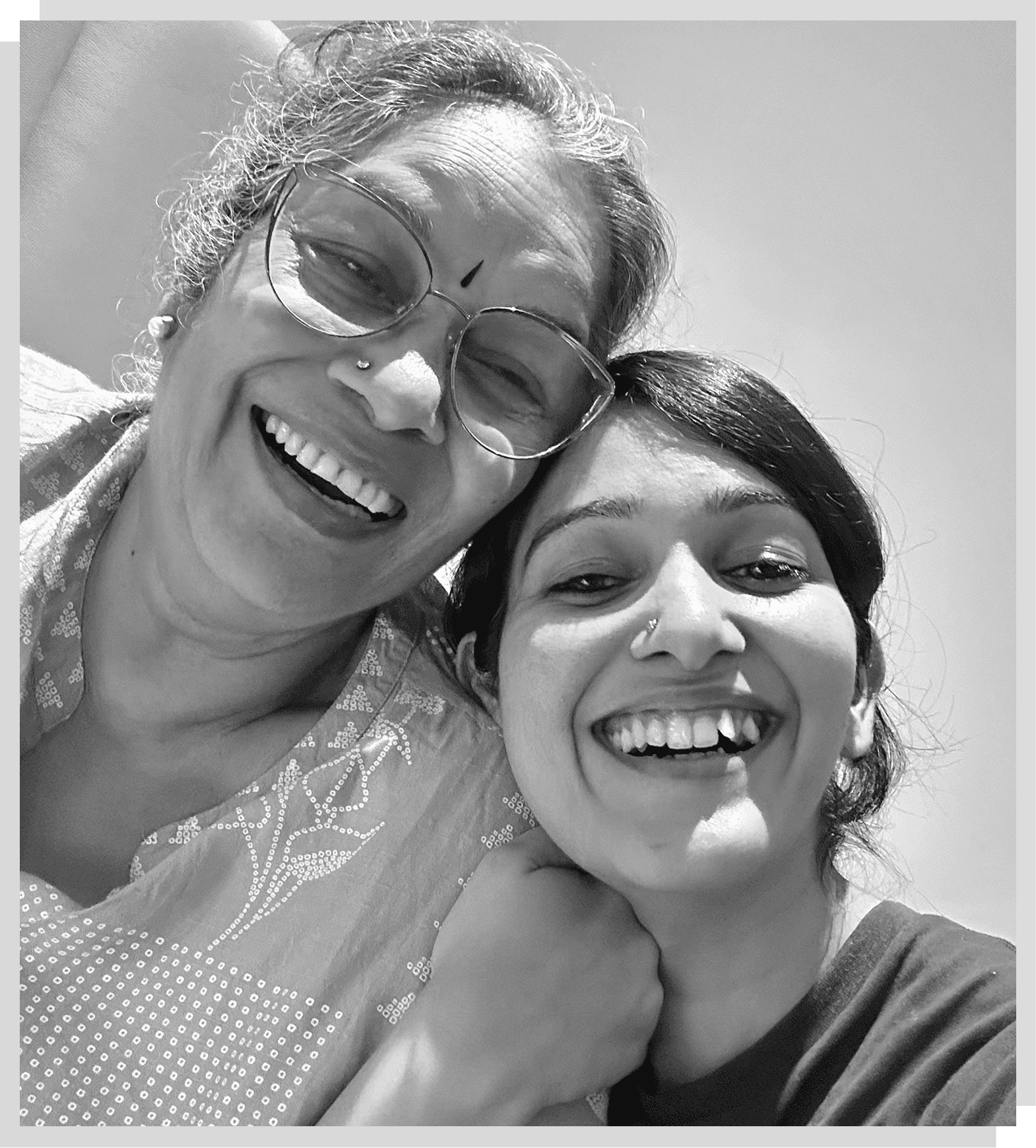
Two visual artists. One comes from the other.
One paints (primarily); the other embroiders.
Both self-taught, and quietly relentless in their pursuit to create, learn, and grow.
Two visual artists. One comes from the other.
One paints (primarily); the other embroiders.
Both self-taught, and quietly relentless in their pursuit to create, learn, and grow.
Two visual artists. One comes from the other.
One paints (primarily); the other embroiders.
Both self-taught, and quietly relentless in their pursuit to create, learn, and grow.
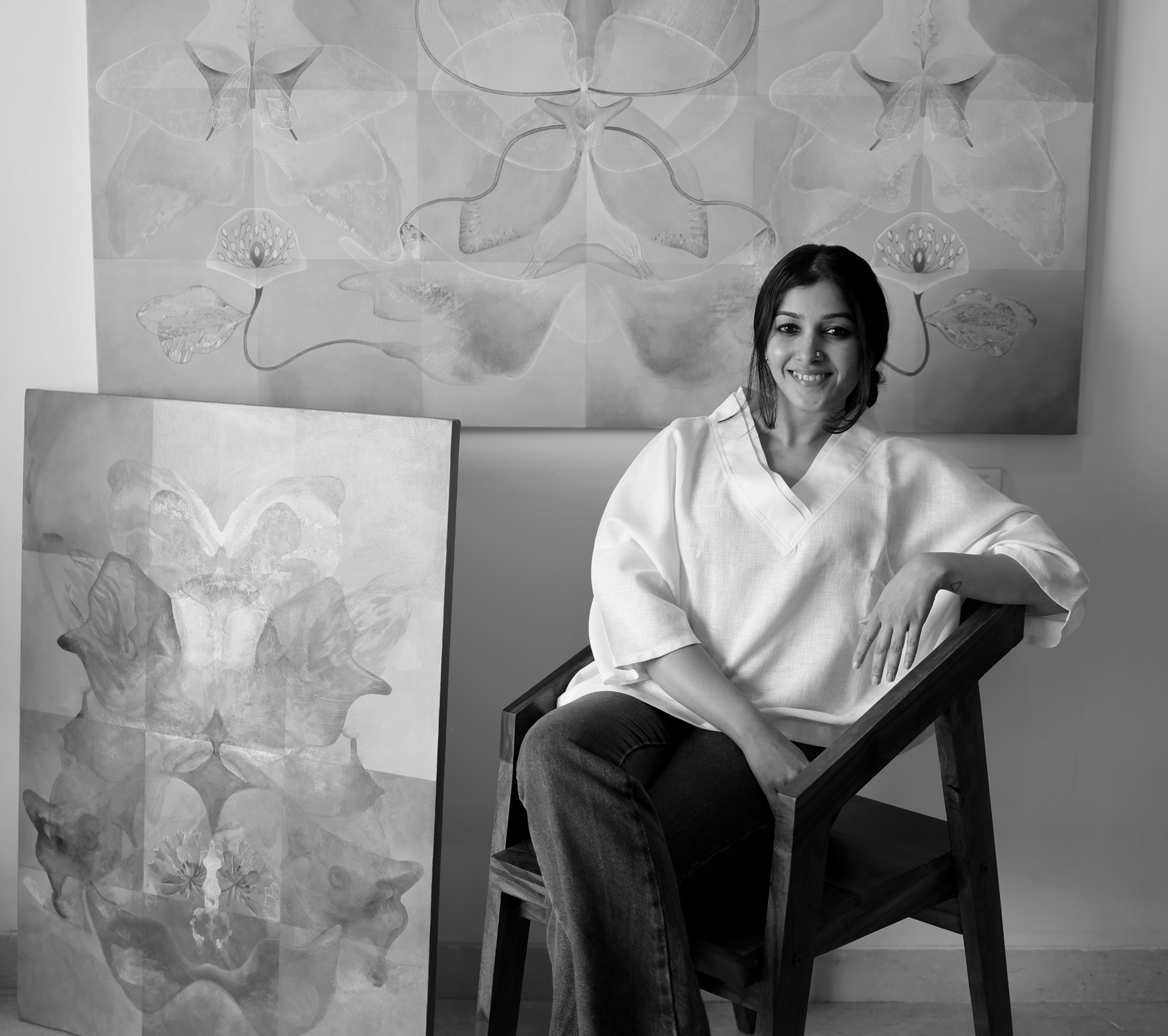

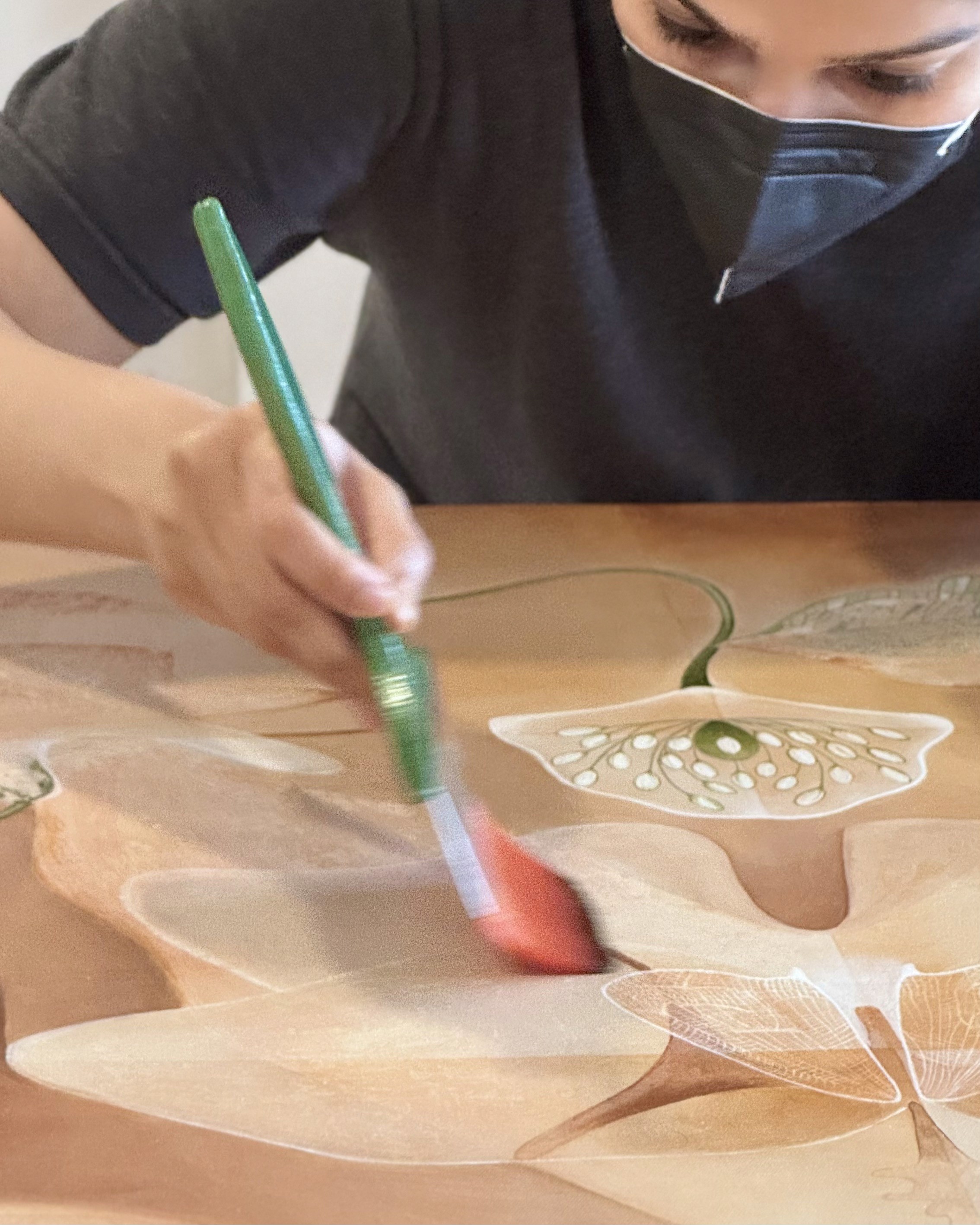
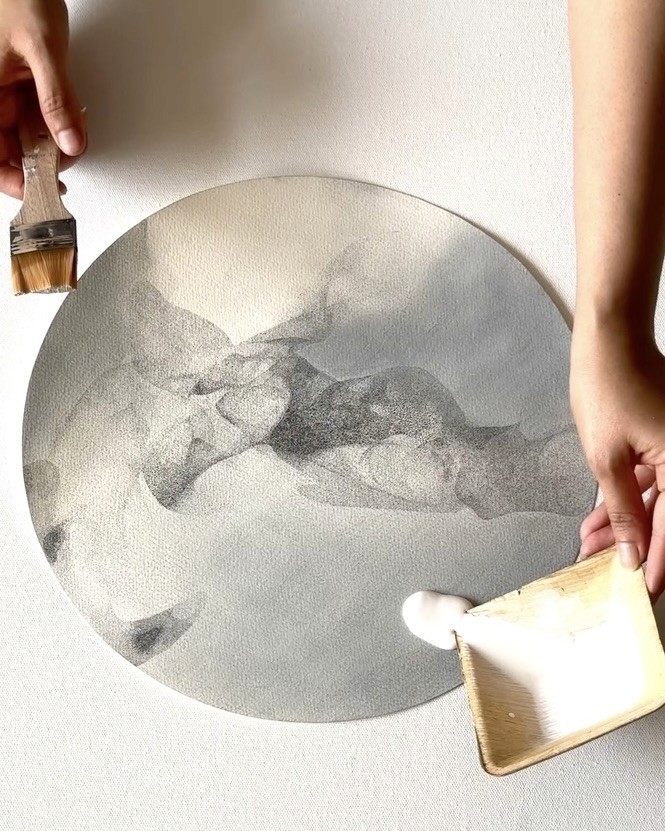
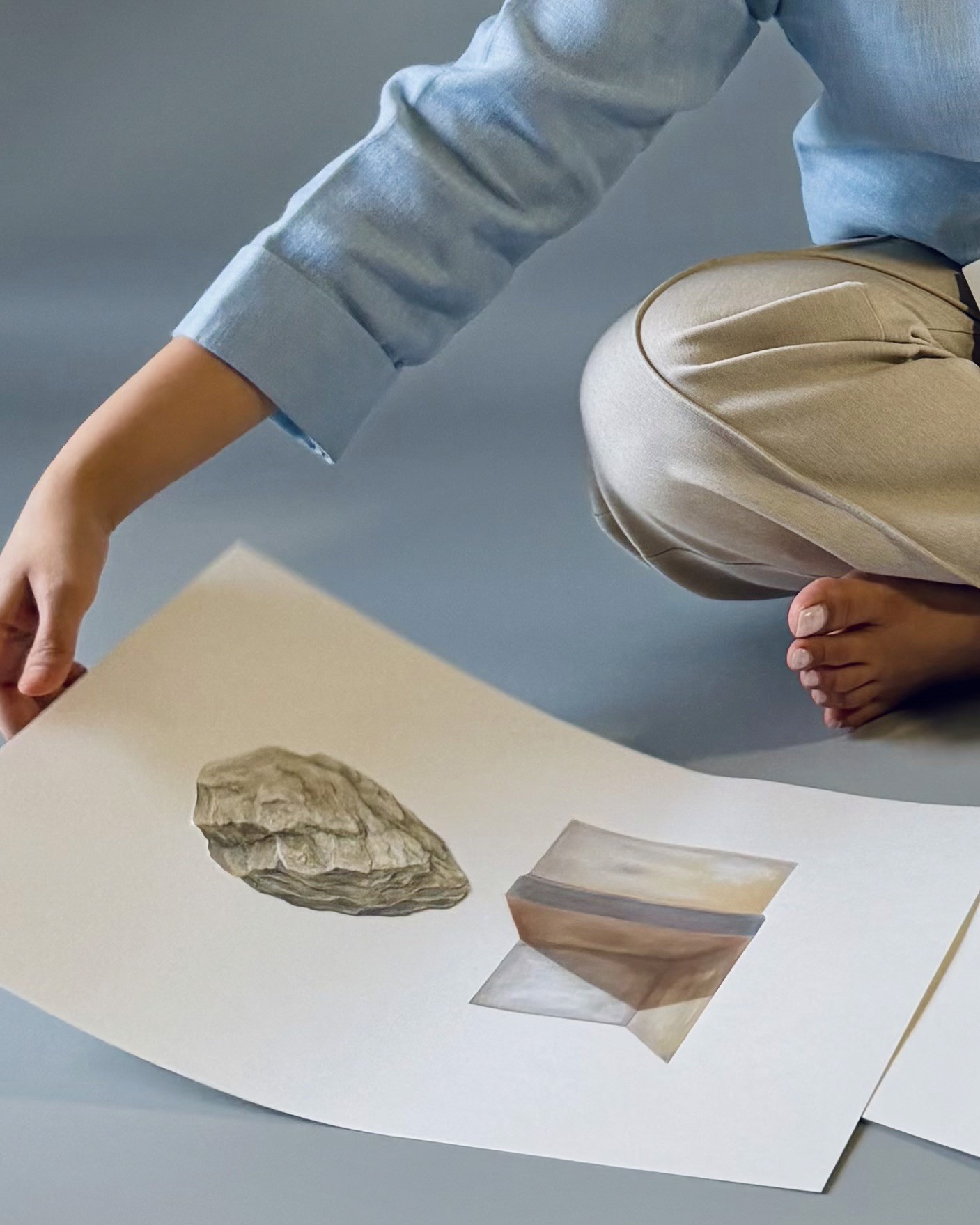
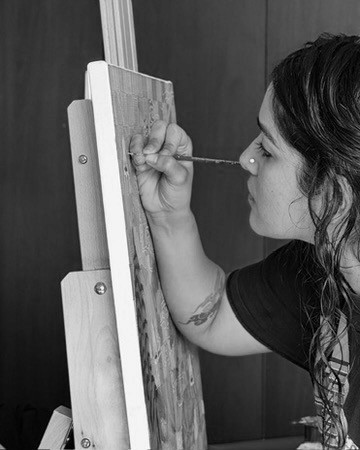
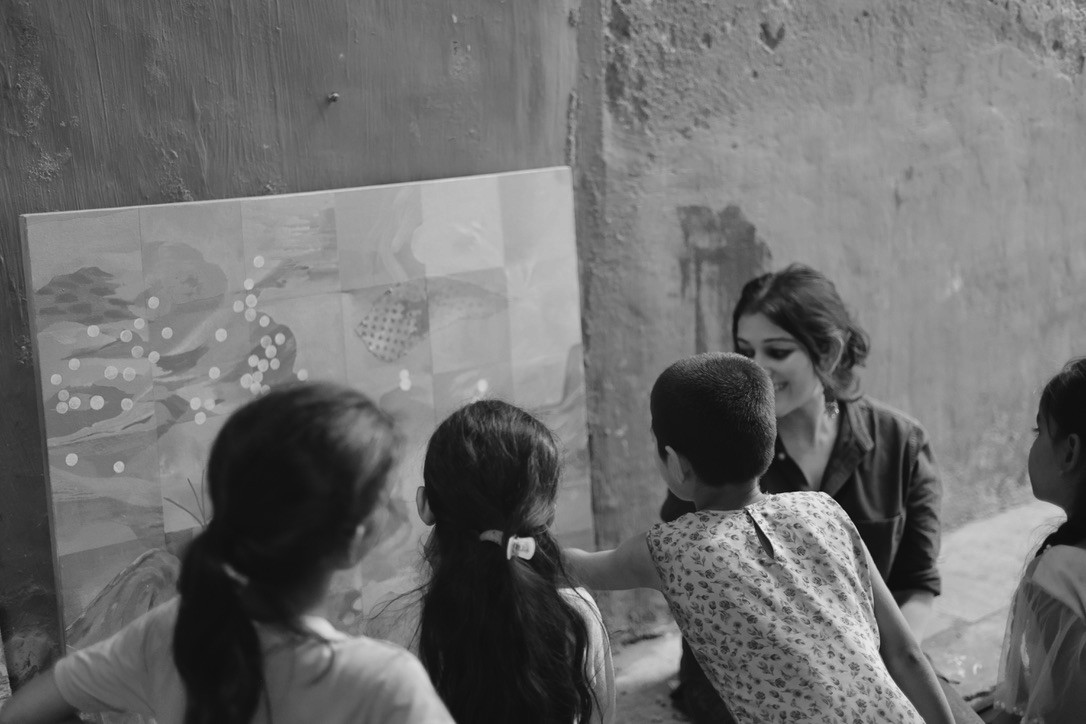
Komal Mishra is a self-taught visual artist based in Mumbai. After an 11-year career in brand marketing, she transitioned to practicing art full-time in 2024.
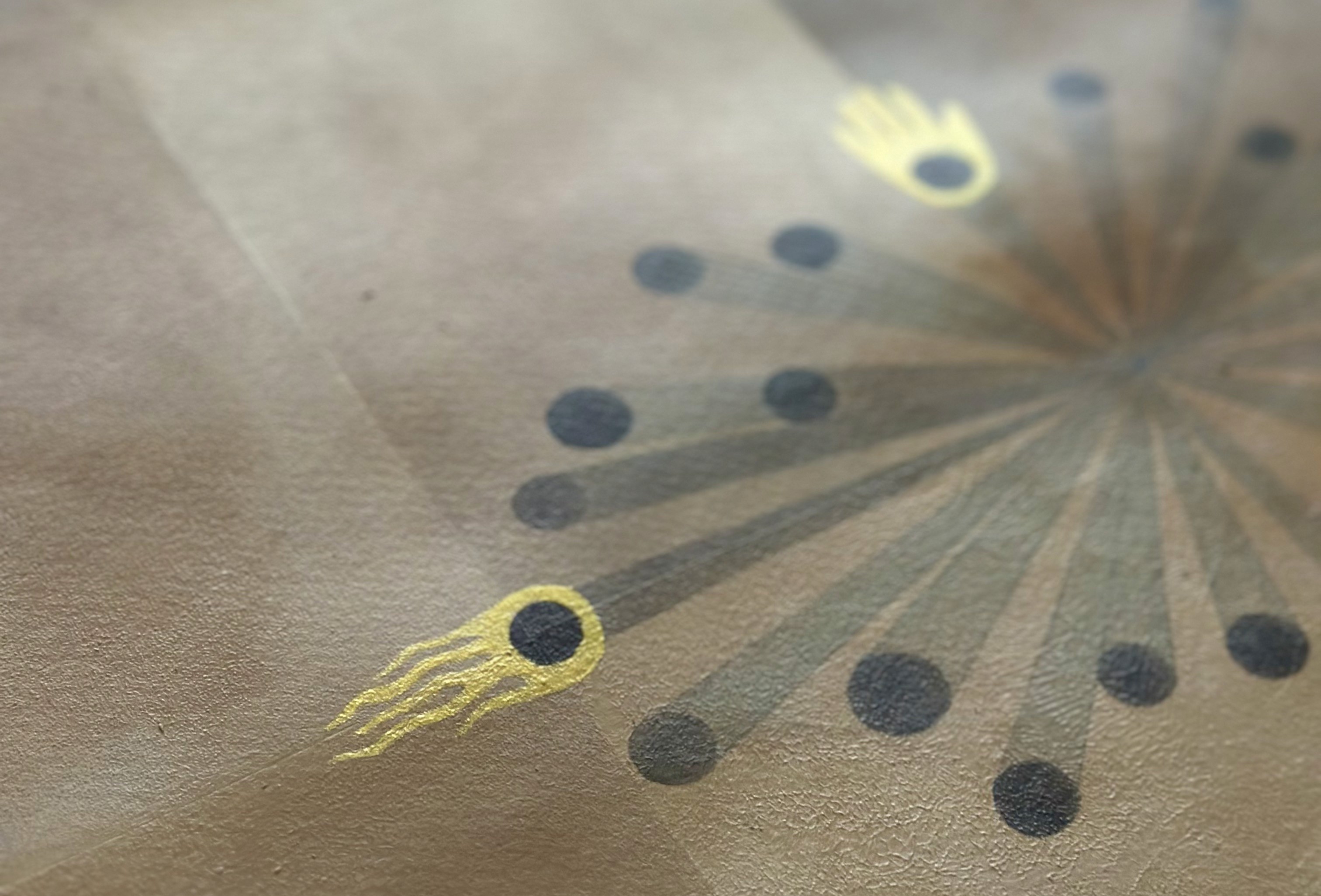
Her work often merges natural forms with repetitive patterns, creating compositions that lean toward subtle abstraction and layered symbolism. Her early curiosity about all that exists naturally was shaped and deepened by academic training in Biotechnology and sustained engagement with natural history through most of her professional years.
She is deeply interested in the interconnectedness of the natural world, from microscopic structures to vast ecosystems. She is equally drawn to the hidden logic that nature operates in - patterns that are often mirrored in human systems.
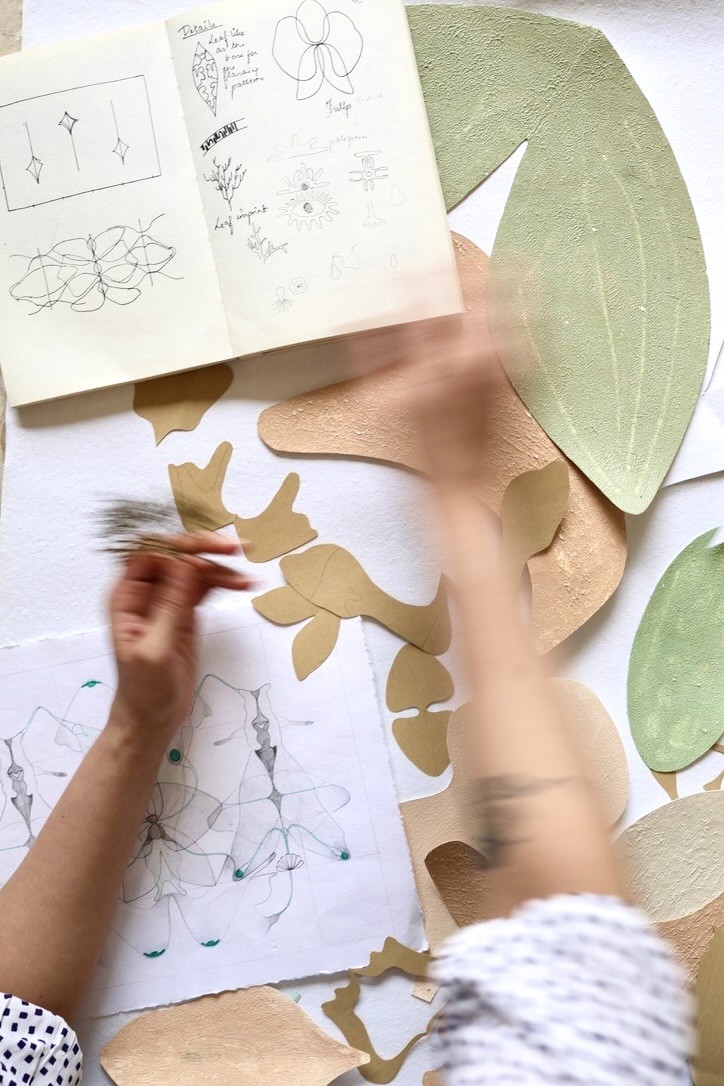
Her practice explores these ideas through layered elements, textural interplay, contrasting techniques and meticulous detailing. Her work continues to evolve through independent exploration and sustained studio practice across materials and techniques.
Komal Mishra is a self-taught visual artist based in Mumbai. After an 11-year career in brand marketing, she transitioned to practicing art full-time in 2024.
Her work often merges natural forms with repetitive patterns, creating compositions that lean toward subtle abstraction and layered symbolism. Her early curiosity about all that exists naturally was shaped and deepened by academic training in Biotechnology and sustained engagement with natural history through most of her professional years.
She is deeply interested in the interconnectedness of the natural world, from microscopic structures to vast ecosystems. She is equally drawn to the hidden logic that nature operates in - patterns that are often mirrored in human systems.
Her practice explores these ideas through layered elements, textural interplay, contrasting techniques and meticulous detailing. Her work continues to evolve through independent exploration and sustained studio practice across materials and techniques.
“Our brain holds visuals that we don't remember seeing. And we preserve countless such images, details, patterns in our mind. I feel that's why some images instantly are more appealing, more personal than the others.”
“Our brain holds visuals that we don't remember seeing. And we preserve countless such images, details, patterns in our mind. I feel that's why some images instantly are more appealing, more personal than the others.”
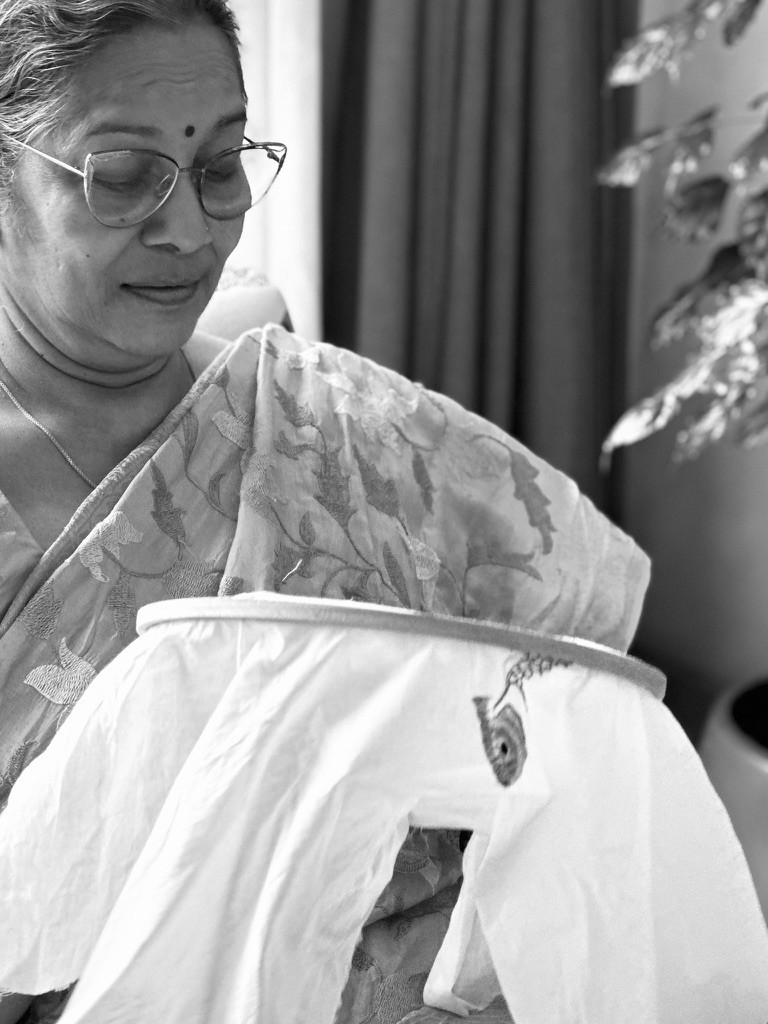
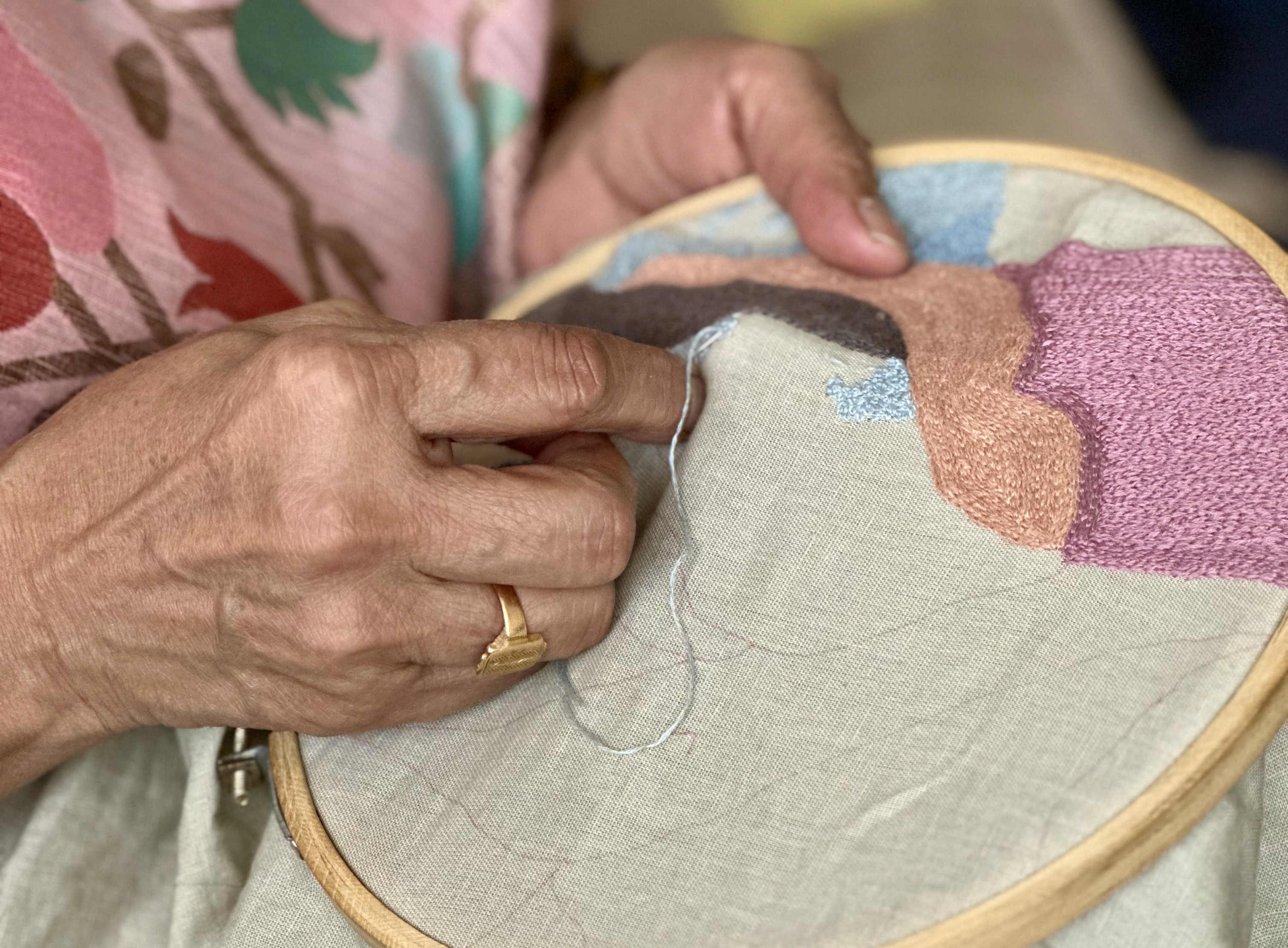
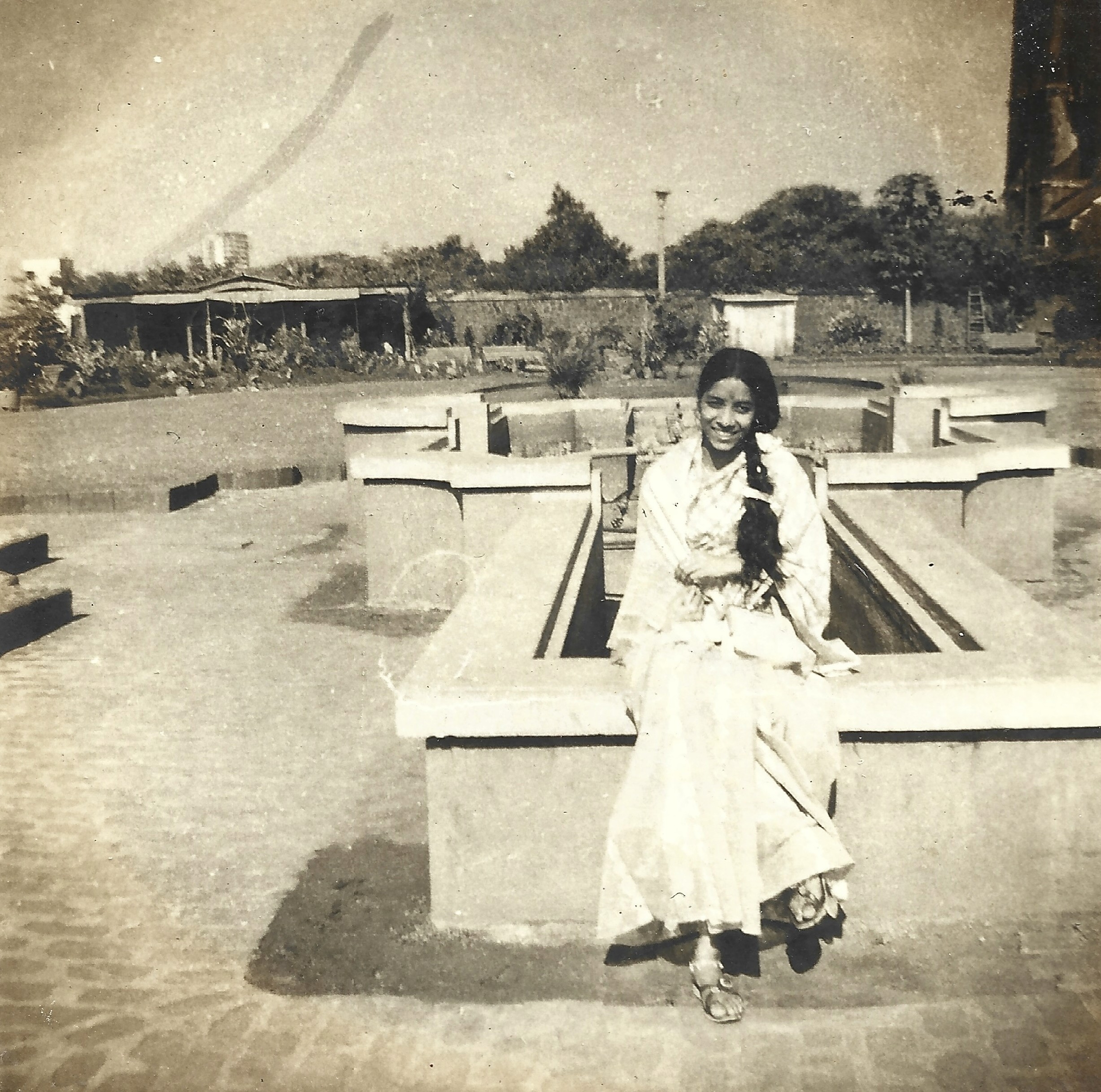
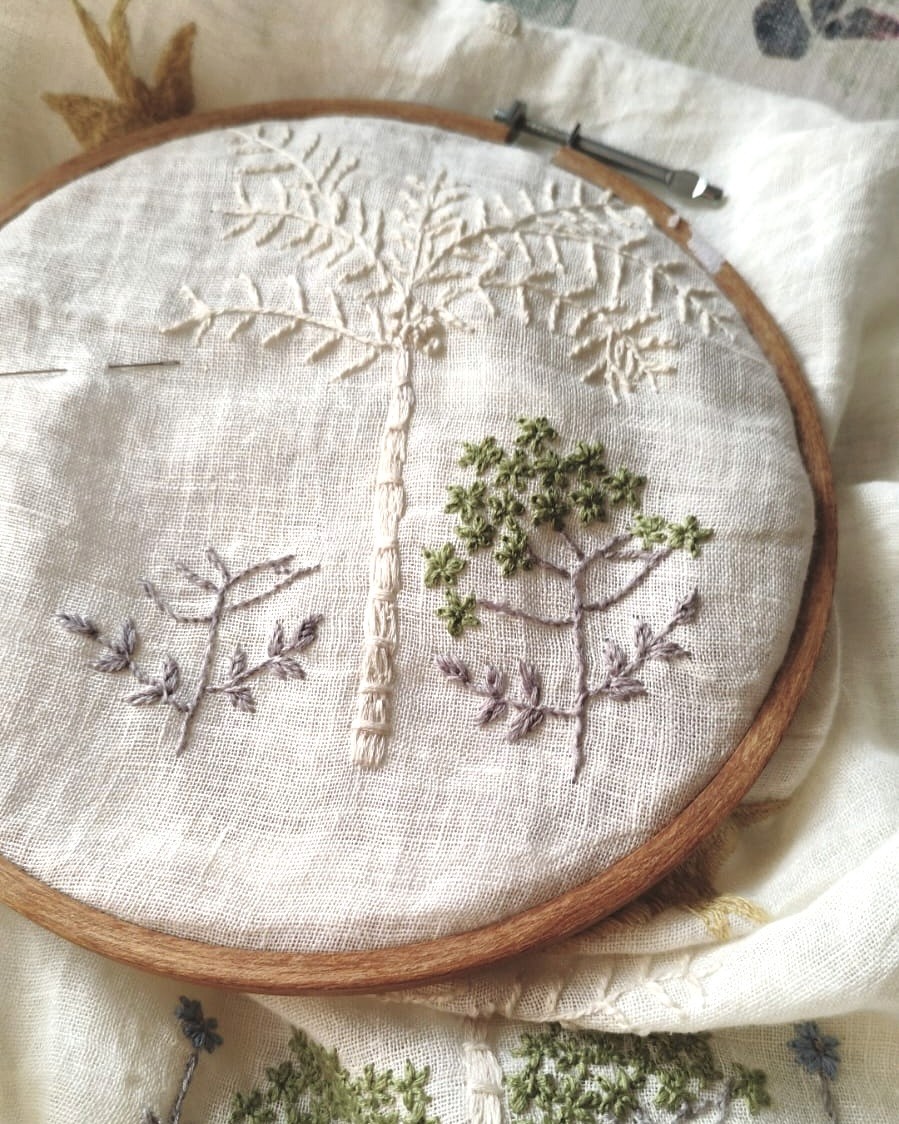
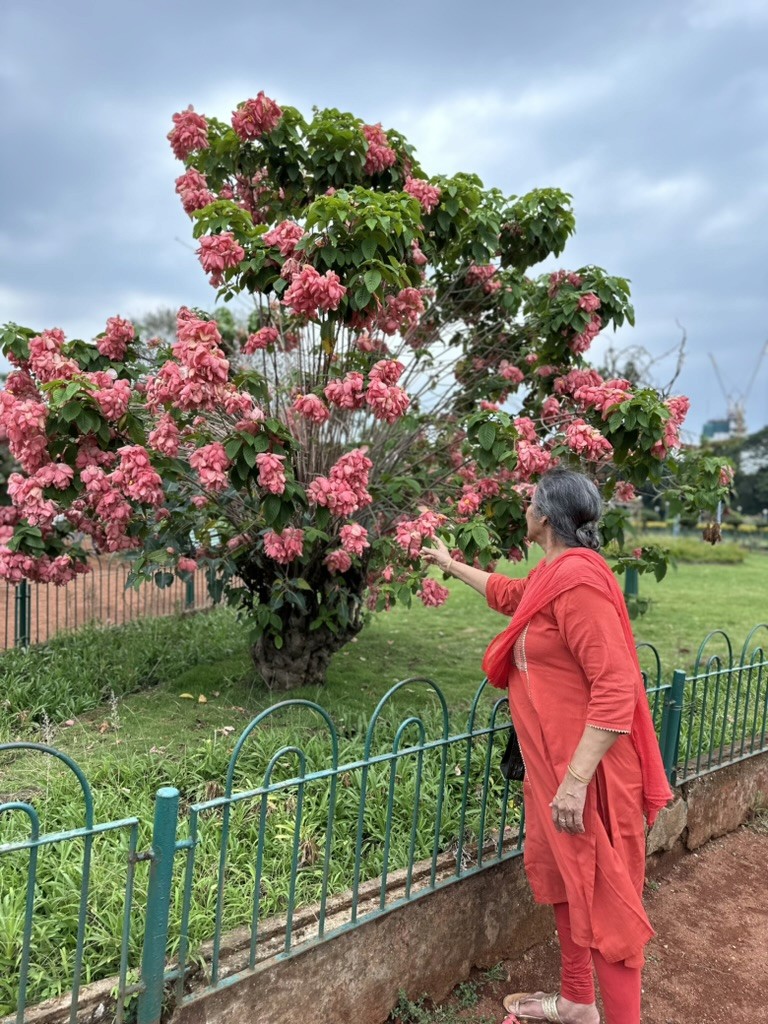

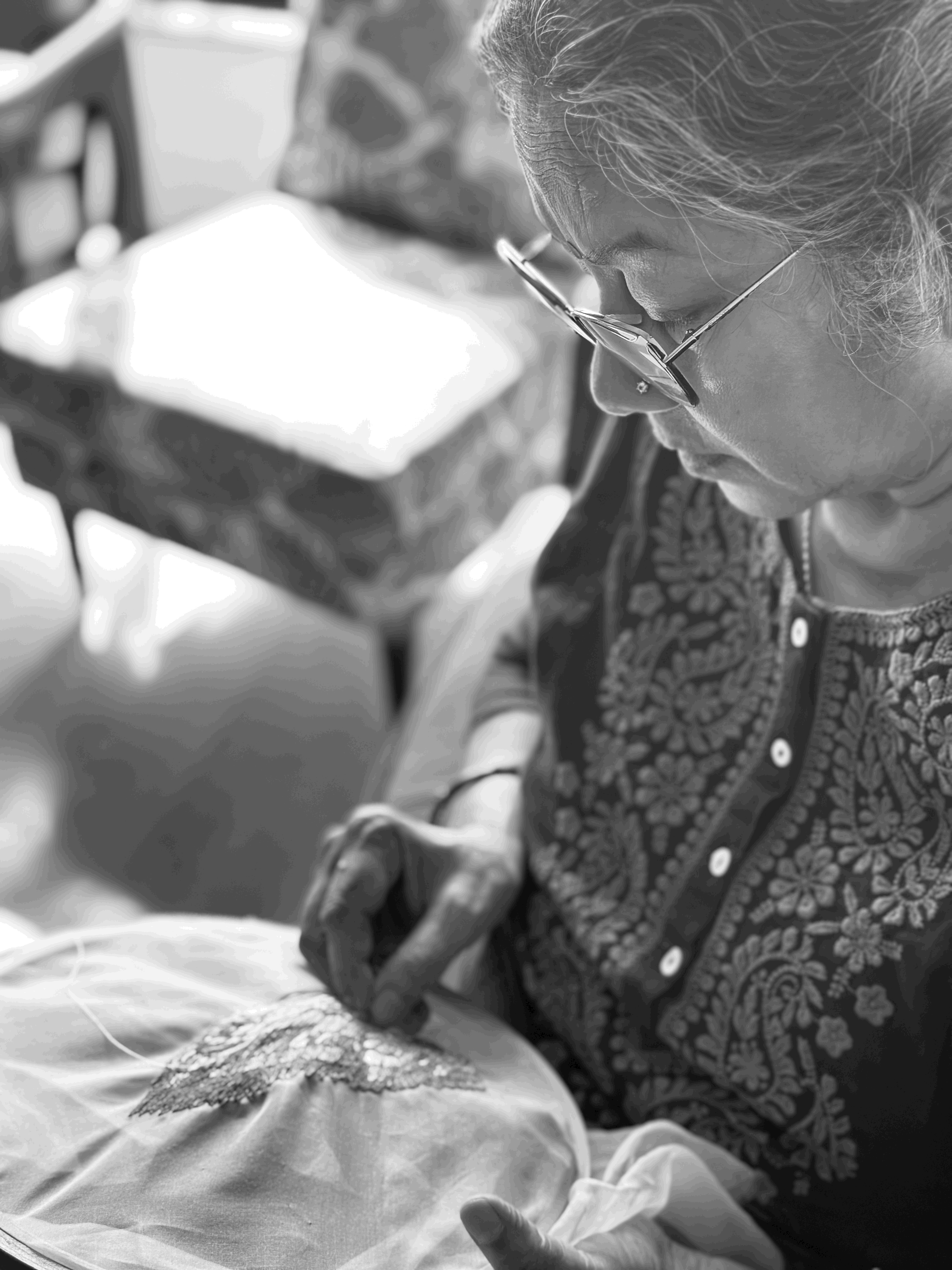
Prema Mishra (b. 1958) first picked up a needle at the age of 12, embroidering a tiny motif onto her mother’s petticoat - with no reference, no tutoring, and no one to show her how to even thread the needle. She still remembers the design; it became a motif that evolved through repetition over the decades.
An observant, imaginative, and deeply curious teenager, she learned stitches simply by watching and experimenting on any scrap of fabric she could find. Moments from her own life became subjects, including a black rose she once grew in her small garden of ten plants.
By the age of 23, sarees, bedsheets, pillow covers, and curtains bore her embroidery. She stitched her own clothes and crafted small toys and beaded torans.
Prema Mishra (b. 1958) first picked up a needle at the age of 12, embroidering a tiny motif onto her mother’s petticoat - with no reference, no tutoring, and no one to show her how to even thread the needle. She still remembers the design; it became a motif that evolved through repetition over the decades.
An observant, imaginative, and deeply curious teenager, she learned stitches simply by watching and experimenting on any scrap of fabric she could find. Moments from her own life became subjects, including a black rose she once grew in her small garden of ten plants.
By the age of 23, sarees, bedsheets, pillow covers, and curtains bore her embroidery. She stitched her own clothes and crafted small toys and beaded torans.
As often happens, the practice slowly gave way to life. In 2020 at the age of 61 years, after nearly four decades, she returned to the needle, along with the same instinct for learning through observation and tireless repetition.
She once embroidered at night, listening to Ameen Sayani on the radio. Today, the background sounds have changed and the needle rarely leaves the fabric. Every spare moment is spent completing works with patience and precision. Dupattas, pillow covers, bedsheets are still getting filled with embroidery. And alongside them, her bespoke artworks.
As often happens, the practice slowly gave way to life. In 2020 at the age of 61 years, after nearly four decades, she returned to the needle, along with the same instinct for learning through observation and tireless repetition.
She once embroidered at night, listening to Ameen Sayani on the radio. Today, the background sounds have changed and the needle rarely leaves the fabric. Every spare moment is spent completing works with patience and precision. Dupattas, pillow covers, bedsheets are still getting filled with embroidery. And alongside them, her bespoke artworks.